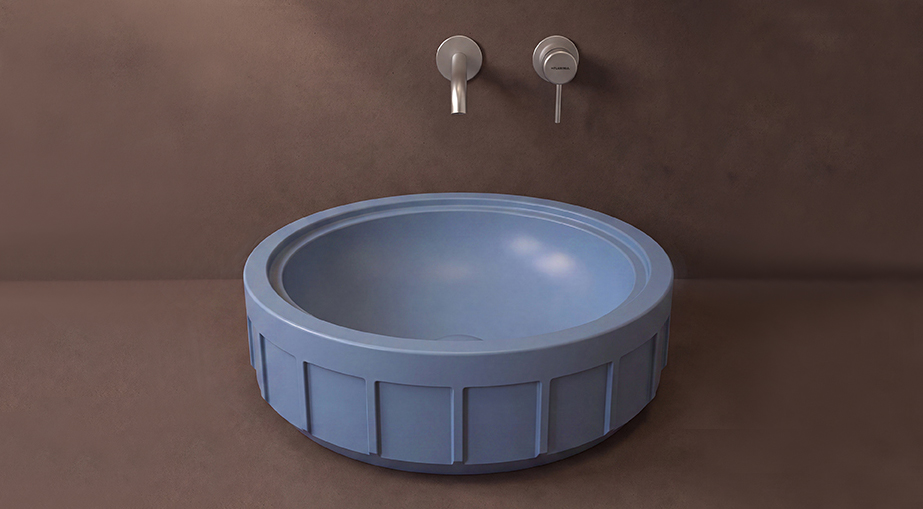
Ceramica Flaminia each week investigates the theme of art and bathroom through the paintings of some great artists such as Tintoretto , Frida Kahlo , Botero and also the exponent of Pop Art Roy Lichtenstein.
Each of these artists has painted a picture where it is represented the bathroom, as intimate and private setting in which the artist chooses to bring the attention of his audience.
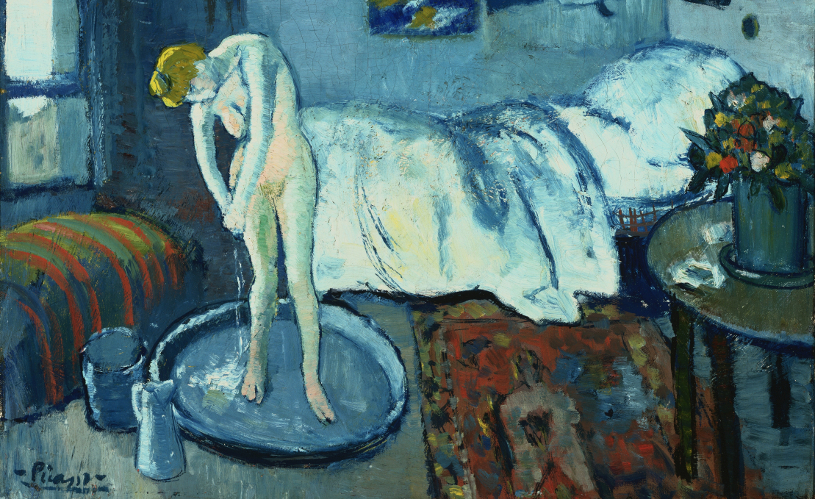
This week Flaminia Ceramica discovers The Blue Room by Pablo Picasso, one of the greatest and most influential artists of the twentieth century. As is well known, the artist throughout his career has changed his painting styles many times, improving his technique with time.
The painting “The Blue Room” was realized in 1901, at the beginning of the so-called “blue period”: in fact, all the works made in this “phase” are made with shades of blue and turquoise, and only in rare cases he used other colors to brighten up the result.
This was defined as the worst period of the art of Pablo Picasso. In his works he represented poor, exploited, marginalized people, painted in decadent and humble setting.
The Blue Room portrayed a naked female figure with her hair gathered and bent on itself . The woman is situated in the center of a very large bowl , intent on brushing. Behind the apparent everyday gesture, the painting actually hides a secret. Turning the work of 45 degrees to the right and focusing in a careful analysis with infrared rays you can see a painting within a painting.
Experts from the National Gallery of Art at Cornell University have detected the image of a bearded man with a suit and bow tie that seems to wear three rings. Probably, the man hidden under “The blue room” is Villard Ambrose, the patron of Picasso.