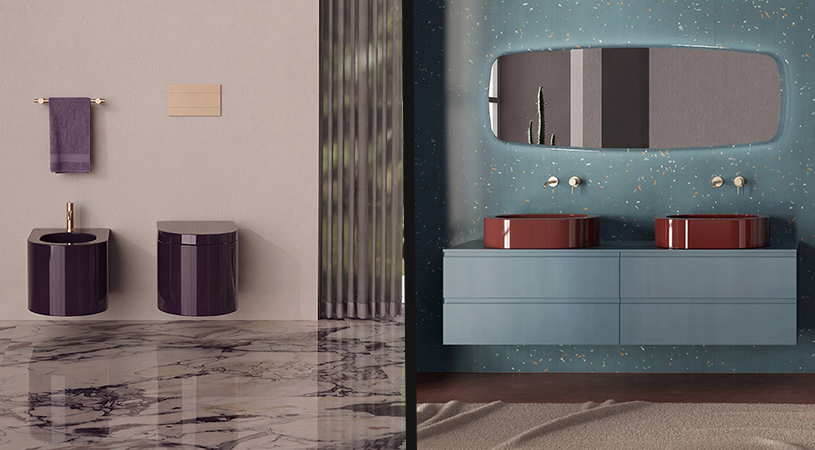
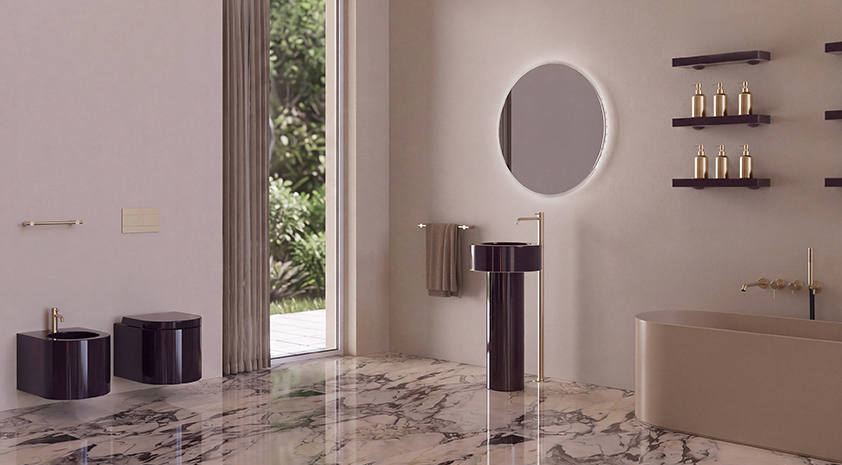
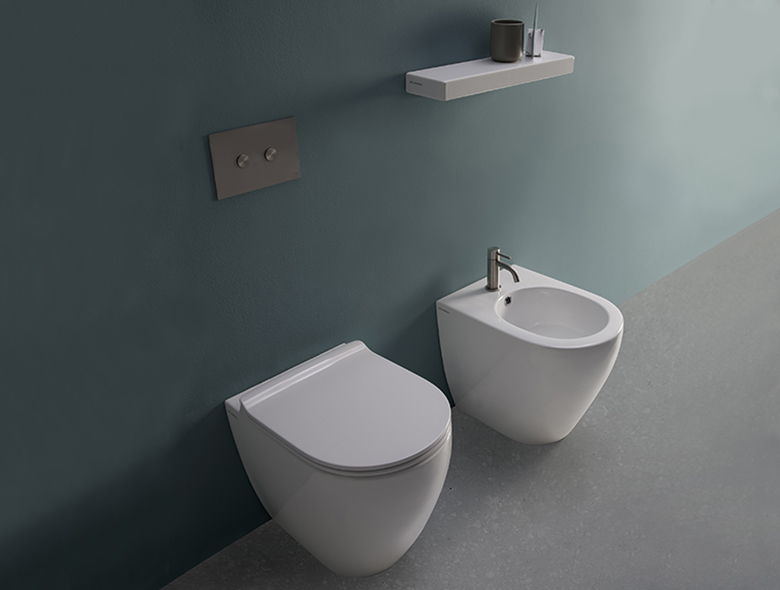
Besides having a strong impact on the aesthetics of the room, the washbasin area is key to the functionality of the bathroom. When the choice falls on a basin with vanity unit rather than a countertop or a wall-hung basin, you are giving priority to having a space where to store detergents, cosmetics and bathroom linen.
Washbasin and vanity unit: our tips on how to combine them
In order to understand how to choose a washbasin with vanity, one must take into account space available, the use to be made of it, and, needless to say, its appearance. There are several options to choose from.
Here are the various possibilities:
- Floor-standing bathroom cabinet with countertop washbasin, the washbasin rests directly on the vanity top while the vanity reaches down to the floor. In this case, the vanity top, made of wood or other materials, becomes a supporting surface for cosmetics, detergents and personal effects;
- Semi recessed washbasin with vanity unit, in this configuration only the edge of the washbasin protrudes beyond the vanity unit while the bowl is completely recessed; the vanity unit has no top in that the washbasin or the console form the countertop. In this case, we also speak of a bathroom cabinet with integral washbasin.
- Wall-hung washbasin with detached storage unit: with this option there is no connection between the storage unit and the ceramic. The wall-hung washbasin has an exposed siphon, while the storage unit can be rested on the floor.
The suspended vanity with semi recessed washbasin is one of the most functional solutions as it facilitates floor cleaning and provides a handy ceramic supporting surface.
Irrespective of type of installation and washbasin, the vanity unit can have doors or drawers, but a fundamental constraint is that it must be a washbasin base unit, i.e., it must have a siphon cut-out.
Visit our website and discover our wide range of vanity units and washbasins.