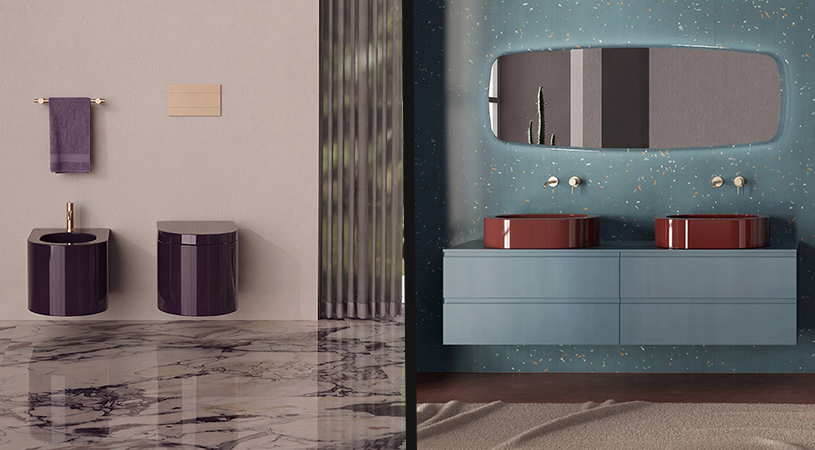
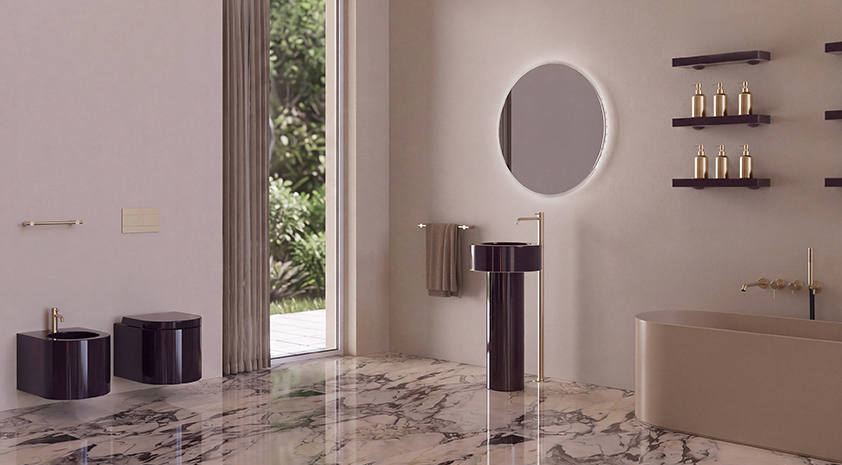
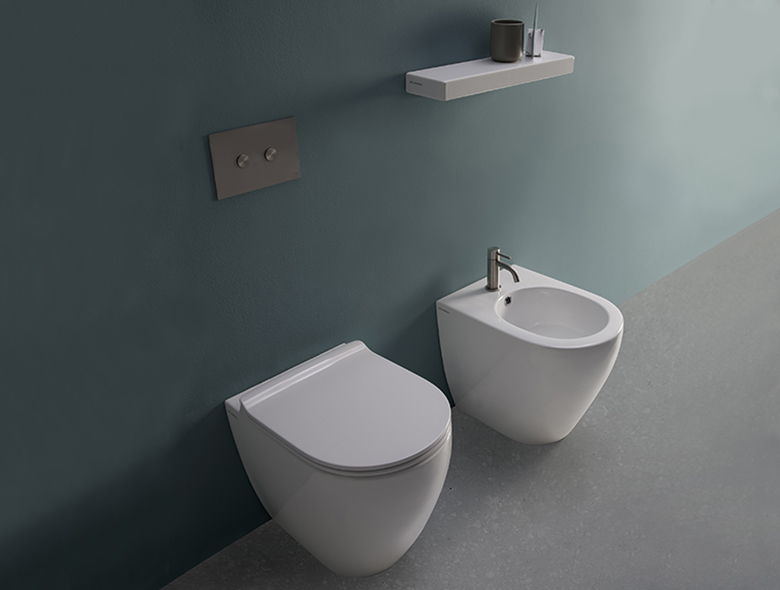
The evolution of bathroom decor, from the Sixties to today, has seen the development of many different shapes and design in the industry of bathroom fixtures and accessories.
Flaminia, the Italian company leader in the production of bathroom ceramics, has always paid much attention to aesthetic, innovation and design. A vision that has engendered over time an evolution in bathroom designing. Let’s recall all the phases that have marked the journey of the company and that led it to become the market leader in the bathroom fixtures industry.
Bathroom concept during the ‘60s
The bathroom in the Sixties was, most of the time, very big. Many houses used to have one smaller guest bathroom, also used as a laundry room, and a main bathroom that usually hosted a bath-tub. A very typical form, during that period when the bathroom decor evolution started its journey. Sanitary ware needed to respond to one main requirement: be comfortable.
The ‘70s and the evolution of lines and shapes for a modern decor
The decades following the economic boom of the Sixties, was a phase characterized by a new conception of modern bathroom, where innovative lines and shapes are the main design features.
The ’80s and the real change
With the Eighties the sanitary ware start a radical transformation in design and production. There is a shift to a new phase: Flaminia starts to automate its production process and it is now able to operate on a large scale and boost the ceramics production. Moreover the research of sinuous and soft lines, bring the company to design new products for bathroom decor. The element that is most distinctive, is color: goodbye to the classic white fixture: the ‘80s mark a real revolutionary phase in bathroom decor.
Acquagrande icon of a contemporary bathroom
With the end of the Nineties the bathroom starts a new innovation phase. Flaminia launches on the market a new revolutionary washbasin Acquagrande, that is still the leading edge of the collection; this washbasins line set the base of a new way to conceive bathroom through its squared and bold lines.
Image source: ceramicaflaminia.it