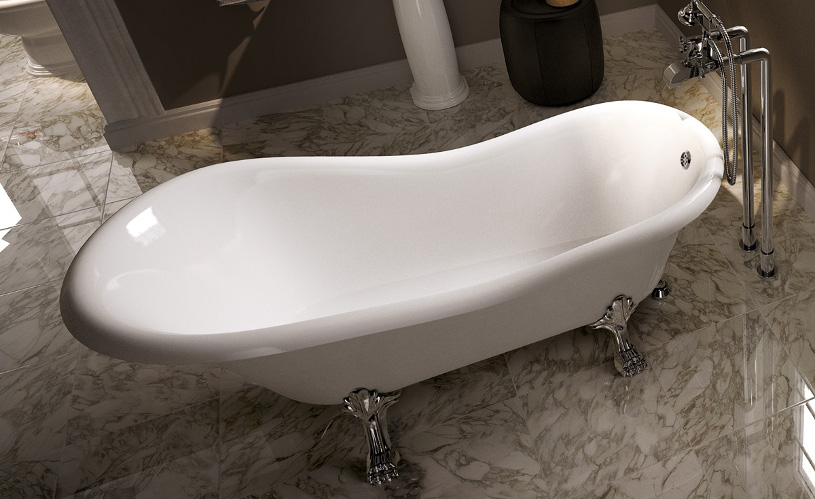
Relax, cleanliness and intimacy. These are just three words that come to mind when you think of the bathtub. It’s so ordinary, but it also has an amazing history.
The bathtub, a symbol of intimacy as it’s know nowadays, was a social sharing place. The first traces about its appearance hail from 1700 b.C. in the Knossos palace, in Creta Island.
In the III century b.C. made its first appearance in Greece, where it became a symbol of refinement and relax thanks to the making use of oils and perfumes that let the bath become not only just a cleaning instrument, but also a place where you can relax and take care of yourself.
Consequently, the contact with Greeks let the bathtub arrives in Rome. In both cultures, however, it wasn’t seen as a personal cleaning instrument, but as a collective moment. Big immersion tanks were seen a sort of social ritual.
Over time, especially after the Roman empire decadence, the diffused custom of the public bath was lost.
In the second half of 1800 the steam bath come back in vogue, and the first installations of running water let the bathtub arrives even in homes. They were initially made of zinc and enamelled cast iron, and then of ceramic.
From very big and squared stone tanks to rounded and captivating design elements, made with different materials: the bathtub history takes with him thousands and thousands years of history. In the last decades it was object of study of many designers, who contributed to extend the number of typologies in the market.
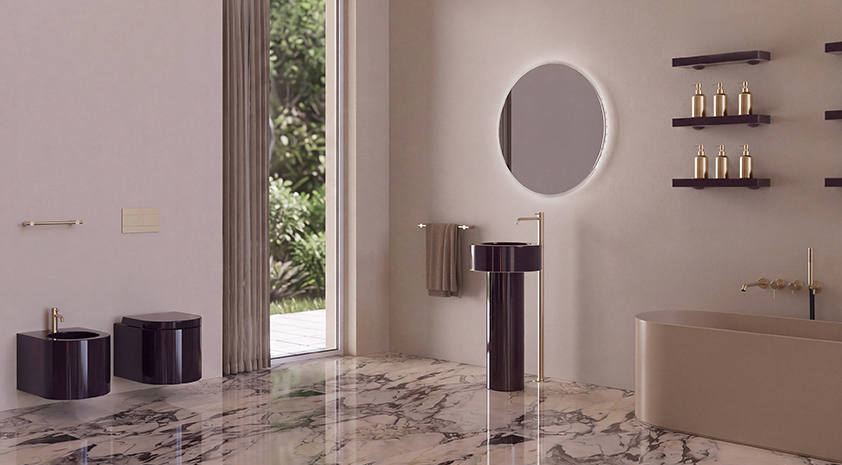
Like the retro aesthetic of the Evergreen bathtub, inspired by the style of the last century, but redesigned to give the bathtub and eternal design. Or the Oval one, a perfect mix between squared and rounded lines made for minimal and sought-after ambient. And even the Leggera bathtub, designed to let the ones who use it feel like they’re rolled up in a big “hanky”.